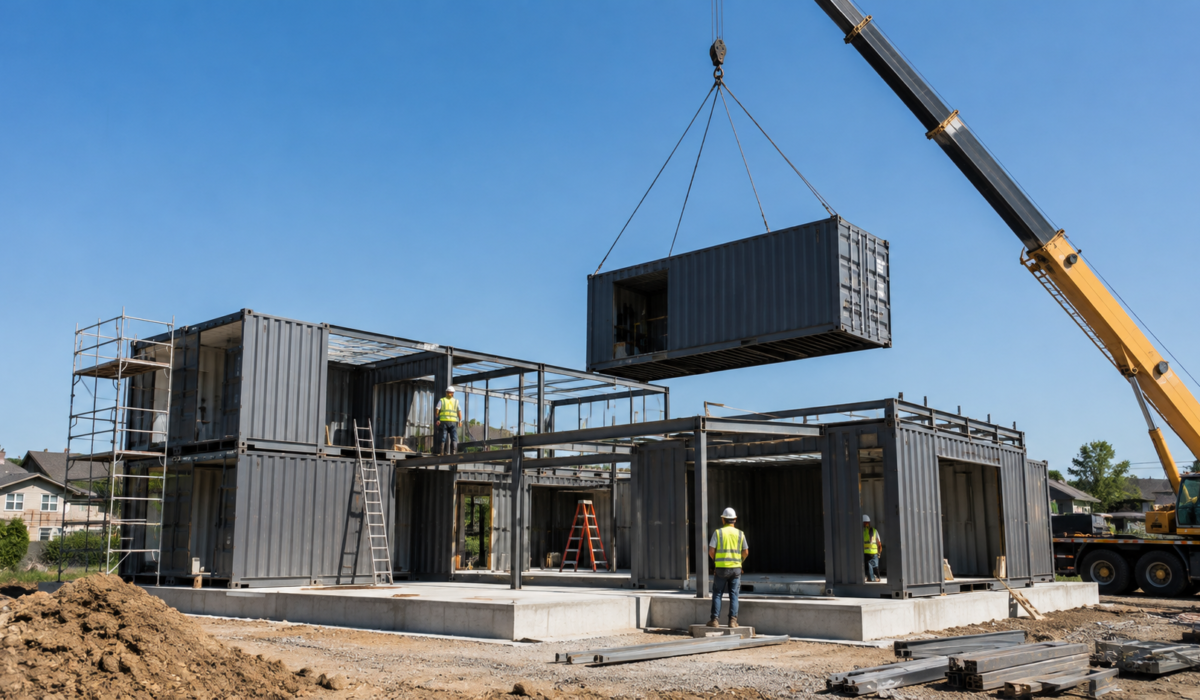
If you’re building a container home from the ground up rather than buying one already finished, a personal loan or standard mortgage often won’t cover it — neither product is really built for financing something that doesn’t exist yet. This is where a construction loan comes in, and it works differently enough from the financing covered in our main container home financing guide that it’s worth its own explanation.
What a Construction Loan Actually Is
A construction loan funds a home build in stages rather than handing you the full amount upfront. Instead of one lump sum, the lender releases money in scheduled disbursements — called draws — as construction actually progresses, with an inspector typically verifying completed work before each draw is released.
The more common version today is a construction-to-permanent loan (sometimes called a one-time-close loan), which combines the construction financing and the eventual mortgage into a single loan and a single closing. According to Bankrate, this structure saves you from paying two separate sets of closing costs and avoids the risk of your financial situation changing between a construction loan and a second, separate mortgage application. Once the build is finished, the loan automatically converts into a standard mortgage — no refinancing required.
How the Draw Schedule Works
You won’t see the full loan amount sitting in an account waiting to be spent. Draws are released as specific construction milestones are completed and verified. A commonly cited standard residential draw schedule, outlined by construction-lending resource CalcDocu, breaks disbursements into roughly five stages: foundation (about 20%), framing (25%), rough-in plumbing and electrical (20%), drywall and interior work (20%), and final completion (15%). Container builds won’t always map onto this exactly, since the “framing” stage looks different when you’re modifying steel units rather than building stick-frame walls, but lenders typically adapt a similar staged structure.
During this phase, you generally pay interest-only payments on the amount actually drawn — not on the full loan balance — which the Federal Savings Bank notes keeps early payments manageable since very little money is outstanding in month one. That payment grows as more of the loan is disbursed, so budgeting for the later, larger payments matters more than budgeting for the first one.
When It Converts to a Permanent Mortgage
The Federal Savings Bank describes the trigger point clearly: conversion typically happens once the home passes final inspection and the local municipality issues a Certificate of Occupancy confirming the build meets code. At that point, your lender will usually require an updated appraisal, confirmation that all draws have been reconciled, and sometimes updated income documentation before finalizing the switch. From there, your monthly payment structure changes from interest-only to a standard amortizing payment covering both principal and interest, typically on a 15- or 30-year term — you can estimate what that payment might look like using our financing calculator.
What’s Different About This for Container Homes
The core mechanics above apply to any construction-to-permanent loan, but a few things matter more specifically for container builds:
Licensed, documented builders matter more here. Bankrate notes that construction loans generally require detailed plans and an approved, licensed builder before approval. Since container homes are less standardized than typical new construction, having a builder who can provide detailed structural and code-compliance plans tends to make a real difference in whether a lender feels comfortable underwriting the project at all.
Appraisal is based on projected value, not current value. Needham Bank explains that construction-to-permanent lenders approve a loan amount based on the property’s projected future value once complete — which means the same comps problem covered in our main financing guide applies here too, just earlier in the process. An appraiser needs a reasonable basis for estimating what a finished container home will be worth, and thin local comps can complicate that.
Cost overruns are a real risk to plan for. Bankrate points out that if actual building costs exceed the loan amount — which it describes as common — you’re responsible for covering the difference out of pocket. Container builds that involve significant custom modification work are worth budgeting conservatively for, since surprises during construction aren’t unique to this material but can be harder to estimate in advance without much local build history to reference.
What It Costs
Exact rates shift with the broader lending market, so treat these as structural patterns rather than fixed numbers. Bankrate notes construction loan rates often run higher than standard mortgage rates, particularly during the construction phase, and closing costs commonly fall in the 2–5% of loan amount range according to figures cited by ConstructTools’ loan calculator resource. Most lenders also hold back a contingency reserve — typically 5–10% of the construction budget — specifically to cover cost overruns, released back to you if it goes unused.
Requirements to Get Approved
- Detailed, professional building plans — for a container home, this generally means engineer-stamped structural plans and clear code-compliance documentation specific to the build
- A licensed, approved builder or contractor overseeing the project
- Sufficient credit and income documentation, similar to what a standard mortgage would require, since this loan sets the terms of your eventual permanent mortgage too
- A land parcel already owned or under contract, since the loan is tied to a specific build site
- A realistic construction timeline, generally in the 6-month to 2-year range according to Assurance Financial’s outline of common construction-to-permanent requirements
Frequently Asked Questions
Does a container home qualify for a construction loan? Generally yes, provided the build has detailed plans, a licensed builder, and meets local code requirements for permanent residential construction. Lenders evaluate container builds against the same construction-loan criteria as any custom home — the unconventional material itself isn’t usually the blocker, but thin documentation or an inexperienced builder often is.
How is a construction loan different from a regular mortgage? A regular mortgage funds an already-existing home in one lump sum. A construction loan releases funds in stages as a home is built, charges interest only on the amount drawn so far, and then converts into a standard mortgage once construction is complete.
Do I have to refinance once the container home is built? Not with a construction-to-permanent (one-time-close) loan — the conversion to a standard mortgage happens automatically once the home passes final inspection. Some older-style construction loans do require a separate refinance, so it’s worth confirming which structure a lender is offering before you commit.
What happens if construction costs more than expected? You’re typically responsible for covering the difference, which is why lenders build a contingency reserve into the loan and why budgeting conservatively upfront matters more with a custom container build than it might with more standardized construction.
The Bottom Line
A construction loan is the right tool specifically for building a container home from scratch — not for buying one already finished, and not for smaller partial financing needs, which the personal loan and rent-to-own options in our other guides cover better. The tradeoff for accessing this kind of staged financing is more upfront documentation and a lender who’s genuinely comfortable underwriting an unconventional build, which makes choosing an experienced container home builder almost as important as choosing the right lender.