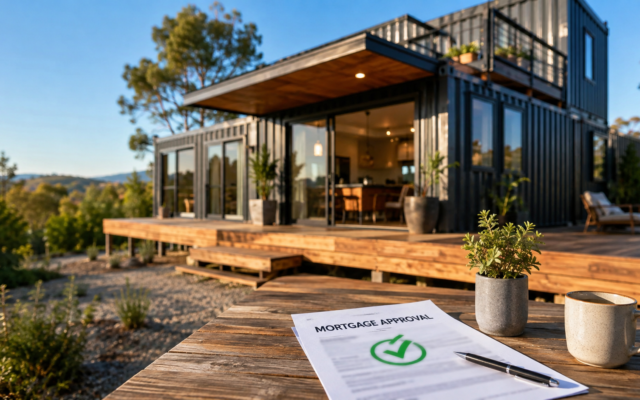
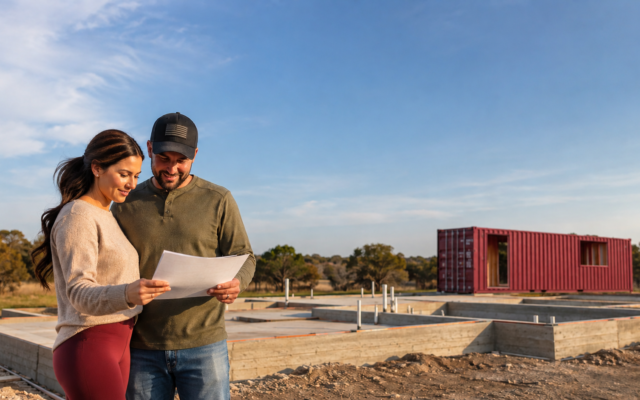
Ask a traditional bank about a mortgage for a shipping container home, and you’ll often get a pause before the answer. Container homes sit in an odd spot in the lending world — not quite a mobile home, not quite a standard stick-built house, and not something most loan officers see cross their desk very often. That doesn’t mean financing is out of reach. It means the path looks different than the one your parents took when they bought their first house, and knowing that upfront saves you a lot of wasted phone calls.
This guide walks through the real financing options available for container homes right now, what lenders actually check before approving you, and the steps that tend to separate an approved application from a rejected one.
A quick note before we start: this article is for general education, not personalized financial advice. Loan terms, credit requirements, and program availability change by lender and location, so treat the numbers here as a starting point for your own research, not a guarantee.
Why Container Home Financing Works Differently
Most mortgage products were built around a simple assumption: the house is permanently attached to land, built from familiar materials, and has plenty of comparable sales nearby for an appraiser to reference. Container homes can check all three of those boxes — but only if they’re set up the right way, and plenty of buyers don’t realize that until they’re already deep into the process.
A few things make lenders more cautious here:
Container homes are still uncommon enough in most markets that appraisers struggle to find “comps” — recently sold homes similar enough to set a fair market value. Without solid comps, some lenders hesitate, because their whole risk model depends on knowing what the home would sell for if you defaulted.
There’s also the permanence question. If your container home isn’t fixed to a permanent foundation with proper utility hookups, many lenders won’t classify it as real property at all — which knocks conventional mortgages and most government-backed programs off the table entirely until construction is far enough along.
None of this makes financing impossible. It just means the “figure out your financing” step needs to happen earlier and more deliberately than it would for a conventional home purchase.
Your Main Financing Options
Personal Loans
For a lot of container home buyers, this ends up being the simplest starting point. Personal loans are based on your creditworthiness and income rather than the property itself, which sidesteps the appraisal and comps problem entirely. You can typically get pre-qualified through an online lender, bank, or credit union without it touching your credit score, and funding tends to move faster than a mortgage.
The tradeoff is size and rate. Personal loans usually cap out lower than what a full container home build costs, and interest rates run higher than a secured mortgage — so this route works best for smaller builds, partial financing, or bridging a gap while other financing is arranged.
Construction Loans
If you’re building from the ground up — pouring a foundation, running utilities, doing a full custom build — a construction loan is worth exploring. These are typically short-term and disbursed in stages as work is completed, then often convert into a standard mortgage once the home is finished and occupiable.
Getting one usually means submitting detailed building plans upfront, which works in your favor if you’re already working with a container home builder who can provide ICC-stamped plans and documented code compliance. Lenders lean heavily on that paperwork to feel comfortable with a build type they don’t see every day.
Conventional Mortgages
Once a container home is permanently affixed to land with a proper foundation and utility connections, it can qualify for a conventional loan much like a stick-built house would. Lenders increasingly treat well-documented container builds similarly to modular homes, which opens the door to lower rates and longer repayment terms than personal loans or construction financing.
Lenders who work in this space, including firms like Shipping Containers USA that specialize in container home financing guidance, commonly point to a credit score around 620 or higher and a down payment starting near 3–5% as realistic benchmarks for conventional approval — though, as with any mortgage, individual lender requirements vary and your specific number may differ.
FHA and VA Loans
Government-backed loans can work for container homes that meet the eligibility bar, and the credit flexibility here tends to surprise people. As of 2026, HUD guidelines allow a credit score as low as 580 to qualify for the standard 3.5% down payment on an FHA loan, with scores between 500 and 579 requiring 10% down instead. In practice, many individual lenders set their own floor higher — often 620 to 640 — so shopping around matters if your score sits near the FHA minimum.
VA loans go further for eligible veterans and service members, often allowing zero down payment on a home that meets permanent housing standards. Both programs require the property to be your primary residence, built on a permanent foundation, and appraised against comparable homes in the area — so the same “is this real property yet” question from earlier still applies.
Home Equity Loans or HELOC
If you already own a home with meaningful equity, a home equity loan or home equity line of credit can fund a container home build — either as a primary residence for someone else or as a secondary structure on your existing property. Because these loans are secured by your current home rather than the container build itself, the appraisal and comps issues largely disappear. The catch is obvious: you need existing home equity to tap in the first place, which rules this out for first-time buyers without another property.
Builder or Manufacturer Financing
Some container home builders and manufacturers offer in-house financing or have direct partnerships with lenders who are already comfortable underwriting their specific builds. This can smooth out a lot of friction, since the builder already knows what documentation the lender expects and can guide you through it. It’s worth asking directly whether your builder offers this — availability varies a lot by company and sometimes changes as builders adjust their offerings.
What Lenders Actually Look For
Regardless of which financing route you’re considering, a few things come up again and again in what lenders check:
Credit score. Requirements vary by loan type, but most paths tighten up meaningfully below the low 600s. Personal loans and some specialty lenders are more forgiving; conventional mortgages and most lender overlays are not.
Down payment. Ranges from zero (VA) to 3.5% (FHA) to 3–5% (conventional) to whatever a personal loan lender requires, which varies widely.
Debt-to-income ratio. HUD’s FHA guidelines generally want this at or below roughly 43%, and most conventional lenders follow a similar benchmark, though exceptions exist for borrowers with strong compensating factors like a large savings cushion or excellent payment history.
Permanent foundation and utility hookups. This is the recurring theme across almost every loan type that isn’t a personal loan — the home needs to read as real, permanent property, not something that could theoretically be hauled away.
Documentation of the build. Detailed construction plans, code compliance paperwork, and — once built — a certificate of occupancy go a long way toward making an unfamiliar lender comfortable.
Common Roadblocks (and How to Work Around Them)
The single most common obstacle buyers run into is a straightforward “no” from their regular bank, simply because container homes fall outside what that lender’s underwriting team is used to evaluating. This isn’t usually personal — it’s often just unfamiliarity.
Credit unions and smaller regional lenders tend to be noticeably more flexible here — container home builders who work with financing regularly, including guides like Steelhaven’s, specifically point to credit unions as more comfortable with non-traditional builds than larger conventional lenders. This tracks with how manual underwriting generally works: smaller institutions have more room to use individual judgment instead of rigid automated criteria, and in regions where container and alternative housing has become more common, local lenders have started building real experience with it.
The appraisal comps problem is the other big one. If there aren’t enough recently sold container homes nearby for an appraiser to reference, some lenders get nervous about the property’s resale value. Working with a builder who can supply modular or prefab home comps — which many appraisers will accept as a reasonable substitute — can help close that gap.
Step-by-Step: How to Get Approved
- Get your documentation ready before you apply — building plans, code compliance paperwork, and proof of income and assets. Having this organized upfront speeds up underwriting considerably.
- Check your credit score and address anything obvious before shopping lenders, since even a modest improvement can shift which loan programs are realistically available to you.
- Talk to credit unions and specialty/regional lenders first, not just your existing bank — this is where container-home-friendly underwriting tends to live.
- Ask builders directly about in-house financing or lender partnerships, especially if you’re buying a pre-designed model rather than a fully custom build.
- Compare offers across at least three lenders before committing — rates, terms, and how comfortable each lender actually is with container builds can vary more than you’d expect.
- Confirm the permanence requirements early — foundation type, utility hookups, and occupancy timelines — so you’re not caught off guard mid-application by a requirement you didn’t know existed.
Frequently Asked Questions
Can you actually get a mortgage for a shipping container home? Yes, once the home is permanently affixed to land with proper utilities and meets local building codes. Before that point, most buyers rely on personal loans or construction financing instead.
What credit score do you need for container home financing? It depends on the loan type. FHA allows scores as low as 580 for the standard down payment tier, though many lenders set their own minimum closer to 620–640. Conventional mortgages typically want 620 or higher.
Is it harder to get approved than for a regular house? Often, yes — mainly because of the appraisal comps issue and lender unfamiliarity, not because container homes are inherently riskier. Working with lenders who have direct experience in this space closes most of that gap.
Where to Go From Here
Financing a container home takes more legwork than a conventional mortgage, but “harder” isn’t the same as “impossible.” Most buyers end up combining approaches — a construction loan to get the build underway, converting to a conventional mortgage once it’s finished, or a personal loan to bridge a smaller gap. The buyers who move through the process fastest are usually the ones who research their financing options before they fall in love with a specific build, not after.