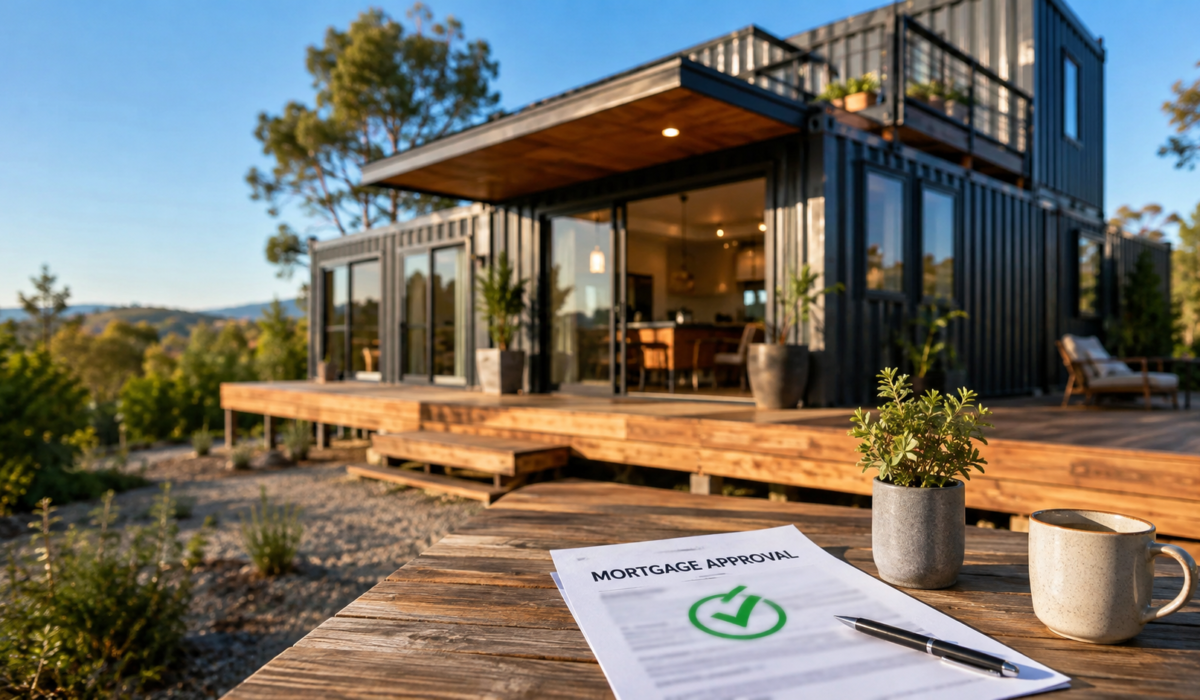
Short answer: yes, but the home generally needs to qualify — or be capable of qualifying — as real property under the requirements of the loan program. A permanent foundation, code compliance, and proper documentation are key factors; the fact that it started as a shipping container isn’t automatically disqualifying.
This page exists to answer that specific question directly. For the full breakdown of every financing path available, see our main financing guide; for how existing chattel or personal loans convert into a mortgage later, see our refinancing guide.
Why the Question Comes Up So Often
Lenders are used to underwriting site-built homes with plenty of local comparable sales to reference. A container home doesn’t automatically fit that pattern, which is exactly why “can I even get a mortgage on this” is one of the first questions most buyers ask — not because container homes are inherently unmortgageable, but because the underwriting path looks different from a conventional home purchase.
What Actually Determines Eligibility
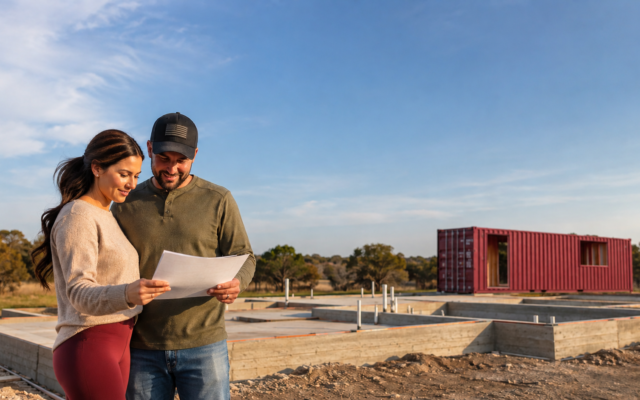
The requirements are consistent with everything covered across our financing guides: the home needs to be permanently affixed to land on a proper foundation, built to local residential code, and legally classified as real property rather than personal property. Once those conditions are met, the property can be evaluated under the applicable rules for the mortgage program, with the home’s construction method, documentation, appraisal, and comparable sales all potentially affecting underwriting.
Appraisal and comparable sales can also matter on their own, separate from the foundation and code questions above. Even if a container home meets the physical and legal requirements, a lender may still need an appraiser to establish supportable market value using appropriate comparable properties — the same thin-comps issue covered throughout our other financing guides.
Which Mortgage Types Might Be Available
- Conventional mortgages — available once the home meets real-property requirements, covered in depth in our main guide
- FHA loans — flexible credit requirements, also covered in our main guide
- VA loans — genuine zero-down option for eligible veterans and service members, covered in our no down payment guide
- USDA loans — zero-down for eligible rural locations, also in our no down payment guide
When a Mortgage Probably Won’t Work
A few situations can make conventional mortgage financing unavailable or substantially more difficult: the container is on leased land rather than land you own, it isn’t permanently affixed (still technically movable), construction isn’t finished, or documentation (permits, code compliance, structural plans) is incomplete. In these cases, a chattel loan or personal loan is often the more realistic path instead, at least until the situation changes.
None of this requires special approval simply because it’s a container home — you need to meet the same real-property and documentation requirements any custom or manufactured home would need, and a lender unfamiliar with container construction may just want more detailed plans, not a different set of rules. If anything feels harder here than with a regular house, it’s usually thin local comparable sales for an appraiser to reference and general lender unfamiliarity — not the container material itself making the home less viable as collateral.
If you’re starting from a chattel loan, converting to a mortgage later is a common path — see our refinancing guide for the real costs and a worked example of when that conversion actually pays off. And if you’re at the very beginning of this process, the first real step is confirming your land ownership and permanent-foundation plans before shopping lenders, since those two factors determine which loan products are even on the table before rate or term become relevant.
The Real Trade off
Yes, a mortgage on a container home is realistic — the deciding factors are the same permanent-foundation, real-property, and documentation requirements covered throughout this site, not the fact that the walls started as shipping containers. If you’re just starting to research this, our main financing guide is the right next stop for the full picture.