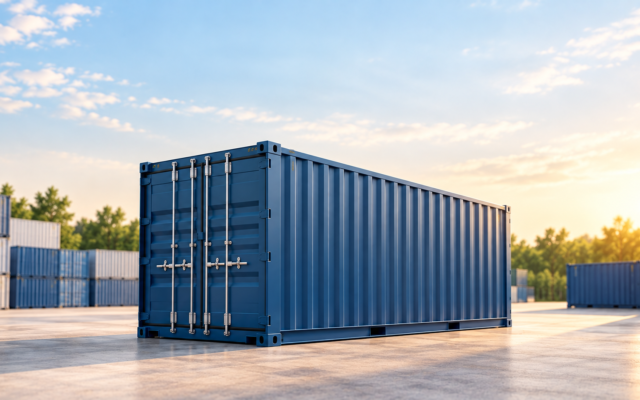
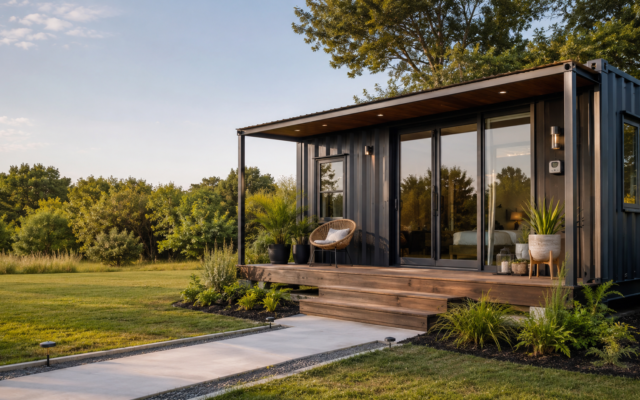
Nothing slows down a loan application faster than scrambling for paperwork after you’ve already started the process. Gathering the right documents before you apply — not after a lender asks — is one of the simplest ways to speed up approval, and it matters even more for container home financing, where lenders are already working with an unfamiliar property type and appreciate seeing a well-organized file.
Standard Financial Documents Every Lender Wants
Shawbrook Capital’s construction loan checklist lays out the baseline financial paperwork almost every lender requests: a government-issued photo ID, your two most recent years of federal tax returns, recent W-2s or 1099s, two to three months of bank statements, and recent pay stubs. Lenders use these to verify your income, calculate your debt-to-income ratio, and confirm you actually have the funds for your down payment and reserves.
1st Eagle Mortgage’s guide adds one worth calling out specifically: your credit report. Lenders pull this directly rather than relying on a number you self-report, and it plays a significant role in both approval and the rate you’re offered. If your credit profile is already a concern going into this process, our bad credit financing guide walks through realistic options.
If you’re self-employed rather than W-2 employed, expect this list to expand — signed tax returns plus a year-to-date profit and loss statement typically replace the standard pay stub requirement, per Timberland Bank’s documentation checklist.
Property and Construction-Specific Documents
This is where container home financing starts to diverge from a standard home purchase, since you’re financing something that either doesn’t exist yet or isn’t a conventional structure.
A signed construction contract with a detailed line-item budget. Shawbrook Capital’s checklist specifically calls this out alongside architectural plans — lenders use it to determine project scope and cost, and a vague or incomplete budget is a common reason applications stall.
Land or lot ownership documentation. If you already own the land, Pulte Mortgage’s checklist notes you’ll need proof of ownership; if you’re purchasing the lot as part of the loan, you’ll need a signed purchase contract instead.
Contractor licensing and insurance proof. Shawbrook’s guide lists this directly as a required item — lenders want confirmation that whoever is building your home is actually licensed and insured, not just a general contractor claim.
What’s Different for Container Homes Specifically
Everything above applies to any construction loan, but container builds carry a few additional documentation needs worth planning for ahead of time. For container builds, detailed structural plans and clear code-compliance documentation can be especially important when a lender or underwriter is less familiar with this construction type — this isn’t a formality specific to containers, it’s the practical evidence that helps convince an underwriter the project is legitimate and buildable as described.
If your build involves modifying shipping containers in ways that go beyond a standard residential build (structural cuts for windows and doors, stacking multiple units, custom framing), it’s worth having your builder provide documentation specifically addressing those modifications, rather than assuming standard construction plans cover it.
A Simple Pre-Application Checklist
- Government-issued photo ID
- Two years of federal tax returns
- Recent W-2s or 1099s (or two years of returns plus YTD profit/loss if self-employed)
- 2-3 months of bank statements
- Recent pay stubs
- Signed construction contract with line-item budget
- Architectural/structural plans (engineer-stamped for container builds)
- Contractor license and insurance proof
- Land ownership proof or signed lot purchase contract
- Proof of required homeowners or builder’s risk insurance, if applicable
Why Gathering These Early Actually Matters
GO Mortgage’s guide to one-time close construction loans frames the practical upside plainly: having your credit documents, employment records, and a detailed construction contract ready upfront simplifies the entire financing process, since a construction-to-permanent loan already involves more moving pieces than a standard mortgage. Missing or incomplete documentation is one of the most common, avoidable causes of delay once underwriting begins.
Frequently Asked Questions
Do I need different documents for a container home than a regular construction loan? The core financial documents are the same, but container builds typically need more detailed structural documentation — engineer-stamped plans and code-compliance proof — since lenders are underwriting a less standardized construction type.
How far in advance should I gather these documents? As early as possible, ideally before you formally apply. Tax returns and bank statements can be pulled right away; construction contracts and plans depend on having a builder selected and a project scoped, so that timeline varies more.
What if I’m buying the land as part of my loan rather than already owning it? You’ll typically need a signed purchase contract for the lot instead of ownership proof, and your lender will likely require both to close simultaneously with your construction financing.
Does a complete document file actually speed up approval? Yes, meaningfully — incomplete or scattered documentation is one of the most common reasons underwriting takes longer than expected, since the lender has to go back and forth requesting what’s missing instead of reviewing a complete file in one pass.
The Bottom Line
None of these documents are unique or unusual on their own — they’re the same paperwork any construction loan requires. What’s different for a container home is how much weight the construction-specific documents carry, since they’re doing the work of convincing a lender your unconventional build is a legitimate, code-compliant project. Gather everything before you apply, not after a lender asks, and the process moves considerably faster.