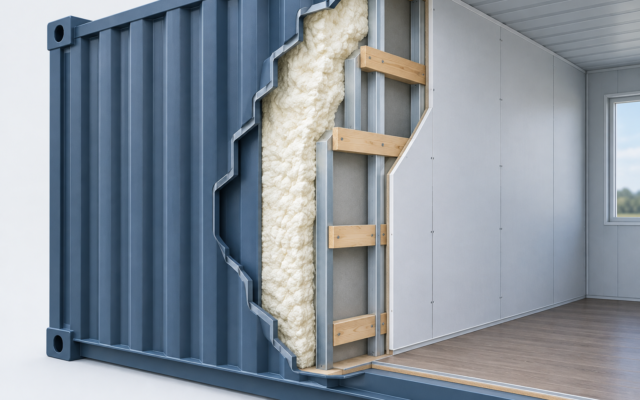
Search this question, and you’ll find wildly different answers — some sites claim container homes hold “100% or more” of their resale value, others say they’re worth meaningfully less than a traditional home. Both can’t be fully right, and it’s worth understanding why the claims diverge before trusting either one: a lot of the most optimistic numbers come directly from companies that sell container homes, which is worth factoring into how much weight you give them.
The honest answer is more conditional than either extreme suggests — and it connects directly to financing decisions covered elsewhere on this site, not just construction quality.
Why the Claims Disagree So Much
Sources like onsitestorage.com’s ROI breakdown cite resale value figures of “100% or more” — a genuinely strong claim, but one made by a company in the business of selling containers, which has a natural incentive to present the investment case favorably. Similarly, STAXHOMES’ market analysis cites 5-10% annual appreciation based on the company’s own decade of sales data — useful as one data point, but self-reported sales figures from a manufacturer aren’t the same as independent market data.
On the more skeptical side, Tiny House’s investment guide notes container homes may have lower resale value than traditional homes specifically because potential buyers can be hesitant about construction and durability — a real concern in markets where container homes remain unfamiliar to typical buyers and appraisers.
Both perspectives are capturing something real. The disagreement isn’t really about whether container homes can hold value — it’s about which container homes, and under what conditions.
The Factor That Actually Determines the Answer
Permit Container Homes’ resale value guide makes the most defensible case in this research, and it lines up directly with what we’ve covered elsewhere on this site: an unpermitted container home can face serious appraisal, financing, and resale problems, while a permitted, code-compliant home built on a permanent foundation has a much stronger case for being valued as genuine real property. This is the same permanent-foundation, real-property distinction covered in our main financing guide and total cost guide — it turns out the same requirement that determines whether you qualify for a conventional mortgage instead of a chattel loan is also a major factor in whether the home holds real resale value. Being permitted and code-compliant doesn’t guarantee any specific appraisal number — location, comparable sales, size, condition, and market demand still matter — but it removes one of the biggest structural obstacles to a fair valuation in the first place.
The same source makes a point worth internalizing directly: an appraiser values what they can see. A container home that looks cheap gets appraised as cheap, regardless of how well it was actually built underneath. Quality interior finishes, professional permit-ready plans, and a legitimate foundation aren’t just financing requirements — they’re the actual mechanism by which the home builds real equity.
Location Still Matters Like It Always Does
Permit Container Homes is direct about this too: a well-built container home in a location with poor amenities, weak schools, or limited job access won’t appreciate as well as a comparable home in a desirable area — the same “location, location, location” principle that governs any real estate, not something unique to unconventional construction.
How Container Homes Compare to Mobile Homes
This comparison comes up often enough to be worth addressing directly. A manufacturing industry comparison notes container homes tend to hold or appreciate in value better than mobile homes, which are commonly compared to vehicles in how they depreciate. That comparison is a useful starting orientation, but it’s a simplification — land ownership, permanent foundation status, location, and how the property is legally titled all affect a mobile home’s value retention too, so treat this as a general tendency rather than a fixed rule either way.
Rental Income as a Separate Investment Angle
Some buyers approach container homes as short-term rental investments rather than long-term appreciation plays. This is a different calculation than resale value — it depends on local vacation rental demand, occupancy rates, and ongoing management costs, not on whether the home itself appreciates. If this is your actual goal, it’s worth running the numbers as a rental business case specifically, rather than assuming rental income and resale appreciation are the same thing.
Frequently Asked Questions
Do container homes actually hold their value? It depends heavily on whether the home is permanently affixed, code-compliant, and professionally built — an unpermitted or poorly documented container home can face a substantially lower appraisal or serious difficulty obtaining conventional financing, while a properly built one can hold value comparably to conventional construction in the same location.
Should I trust claims that container homes have “100% or more” resale value? Treat figures like this with some skepticism, especially when they come from companies that sell container homes. It’s not necessarily false, but it’s a claim from an interested party, not independent market data — verify with a local appraiser familiar with alternative construction before relying on it for your own financial planning.
Does financing choice affect resale value? Indirectly, yes — the same permanent foundation requirement that determines whether you qualify for a conventional mortgage rather than a chattel loan is also the factor that most directly determines whether the home appraises as real property with genuine resale value.
Is a container home a better investment than a mobile home? It can have stronger value-retention potential when it’s permanently affixed, code-compliant, and treated as real property, but the outcome depends heavily on the land, location, construction quality, and local market. Mobile homes can also retain or gain value under the right land and ownership circumstances, so this isn’t a fixed rule in either direction.
The Bottom Line
A container home can be a genuinely good investment, but “container home” alone doesn’t guarantee that outcome any more than “traditional house” guarantees it. The deciding factors are the same ones that determine your financing options in the first place: a permanent foundation, code compliance, quality construction, and location. Approach optimistic resale-value marketing with the same skepticism you’d apply to any seller’s pitch, and lean on the structural fundamentals — the same ones covered throughout this site’s financing guides — as the real basis for your decision.